
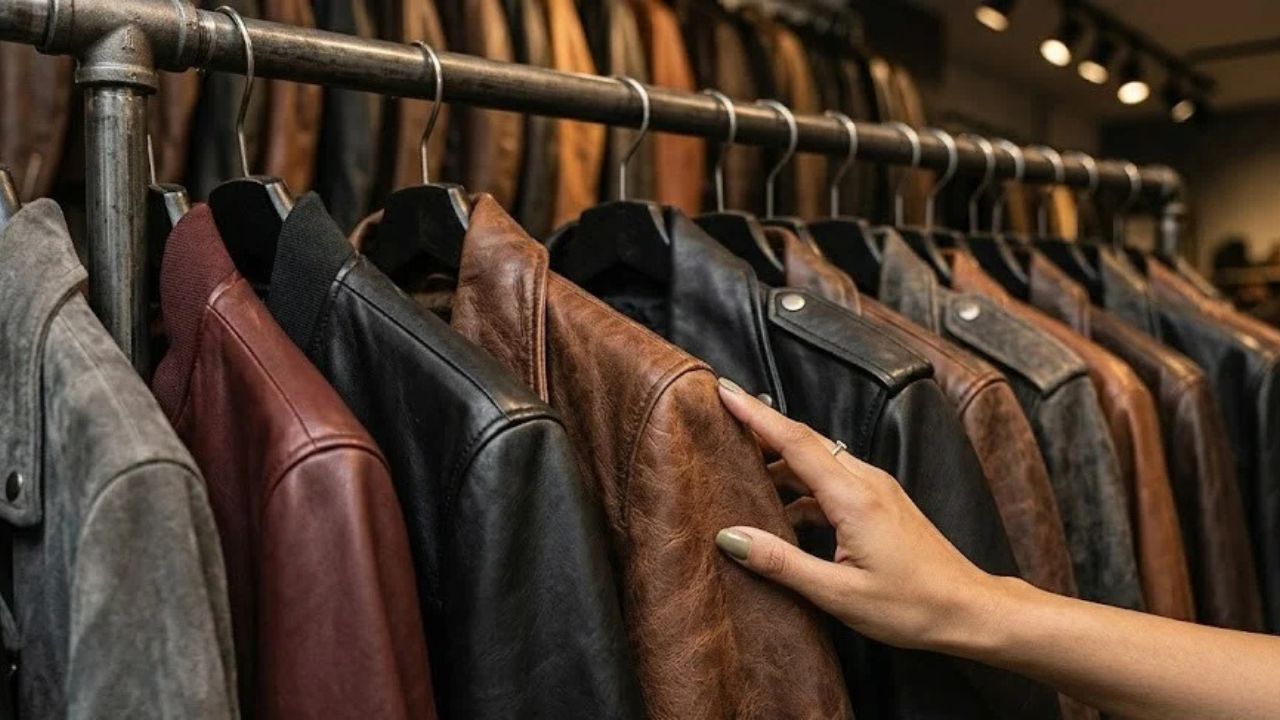
Most people buy their first leather jacket wrong. They fall for a photo, order their usual size, and end up with something that looks great on the hanger and awkward on them. A leather jacket is meant to last years — decades, if you look after it — so it’s worth slowing down and getting the details right. Fit, leather, sizing: those three things decide everything. Here’s how to think about each one, whoever you’re buying for.
Start With Fit, Not Style
Style is the fun part, so it’s the part everyone jumps to first. Resist that. Fit is what makes or breaks a leather jacket, and it starts at the shoulders.
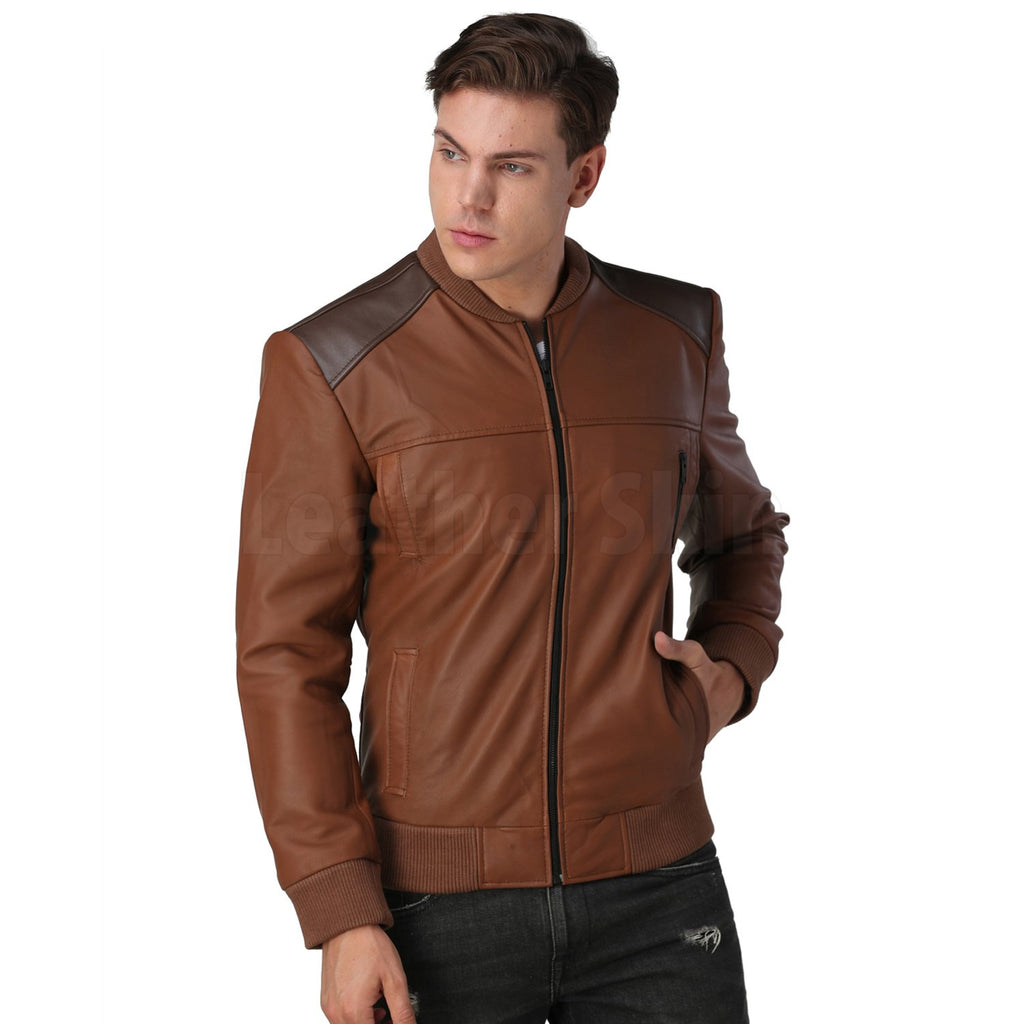
The shoulder seam should land right on the edge of your shoulder bone. Not halfway down your arm, not pulling tight across your back — right on the bone. That single line is the hardest thing to alter after the fact, so if it’s wrong in the fitting room, it stays wrong. Everything else you can live with or adjust; the shoulders you can’t.
After that, look at the sleeves. They should reach your wrist bone and still let you bend your arm without the whole jacket riding up. And leave yourself a little room through the body — enough for a sweater underneath, because a jacket that only closes over a t-shirt is a jacket you’ll wear four months a year. Nail the fit and honestly, most styles will look good on you.
Choosing a Style That Suits You
With the fit sorted, style is where you get to have some fun. What works comes down to your build, what’s already in your wardrobe, and how you’ll actually wear it day to day.
Men’s Leather Jacket Styles
The men’s classics have stuck around because they work. A biker jacket gives you structure and an edge, thanks to that off-centre zip. A bomber is the easy one — relaxed, quick to layer, hard to get wrong. A café racer keeps things clean and minimal, and it dresses up better than you’d expect. And a longer leather coat pulls the whole look sharper and more formal. Here’s the shortcut: the right leather jacket for men is the one that fits the clothes you already own, not the one that demands a whole new wardrobe to make sense. Casual dresser? A bomber or racer will earn its keep. Want more presence? Go biker or coat. Seeing the full spread of men’s leather jackets in one place makes the differences obvious fast.
Women’s Leather Jacket Styles
For women, it’s mostly about silhouette and proportion. A moto or biker cut throws an instant edge over a dress or denim. A cropped style plays perfectly with high-waisted jeans and skirts. A fitted jacket sharpens up a put-together outfit, while an oversized cut leans into that easy, streetwear-adjacent look and layers like a dream. The best leather jacket for women is one that slides straight into the outfits you already wear. Scrolling through a proper range of women’s leather jackets — cropped through to coat length — is the quickest way to spot the shape that actually suits your frame.
Getting the Right Size When Off-the-Rack Doesn’t Fit
Here’s the thing nobody says out loud: standard sizing is built for an “average” body that a lot of people just aren’t. If you’re broad through the chest and shoulders, or taller than the pattern-makers planned for, off-the-rack jackets tend to fail the same way every time. Sleeves that quit before your wrists. A hem that creeps up. Shoulders that fit fine while the body strains at the buttons.
That’s exactly the gap a dedicated range fills. Good big and tall leather jackets aren’t a normal pattern scaled up until something splits — they’re cut with genuinely different proportions: more length through the body and arm, a wider chest, a shoulder line built for a bigger frame from the start. If your jackets always fit the shoulders but pull everywhere else, or cover your arms but never quite make it to your wrists, it’s worth browsing leather jackets for bigger and taller builds instead of fighting standard sizing. The right proportions from the outset beat any tailor’s bill after.
When to Consider a Custom Leather Jacket
And sometimes even the right size isn’t quite it. A longer torso, an unusual sleeve length, a fit that falls dead between two standard sizes — that’s the moment made-to-measure stops being a splurge and starts being the sensible move.
With custom leather jackets, the jacket gets built to your numbers rather than the closest size on the rack, so the shoulders, sleeves, and body all land where they’re supposed to — together, not one at the expense of another. And it goes past fit. You usually get a say in the leather, the colour, the hardware, the lining, so the finished jacket matches your taste as closely as your measurements. If off-the-rack has never quite worked for you, or you just want something nobody else is wearing, a custom-made leather jacket is the shortest path to the exact thing in your head.
Leather Types and What They Mean for Wear
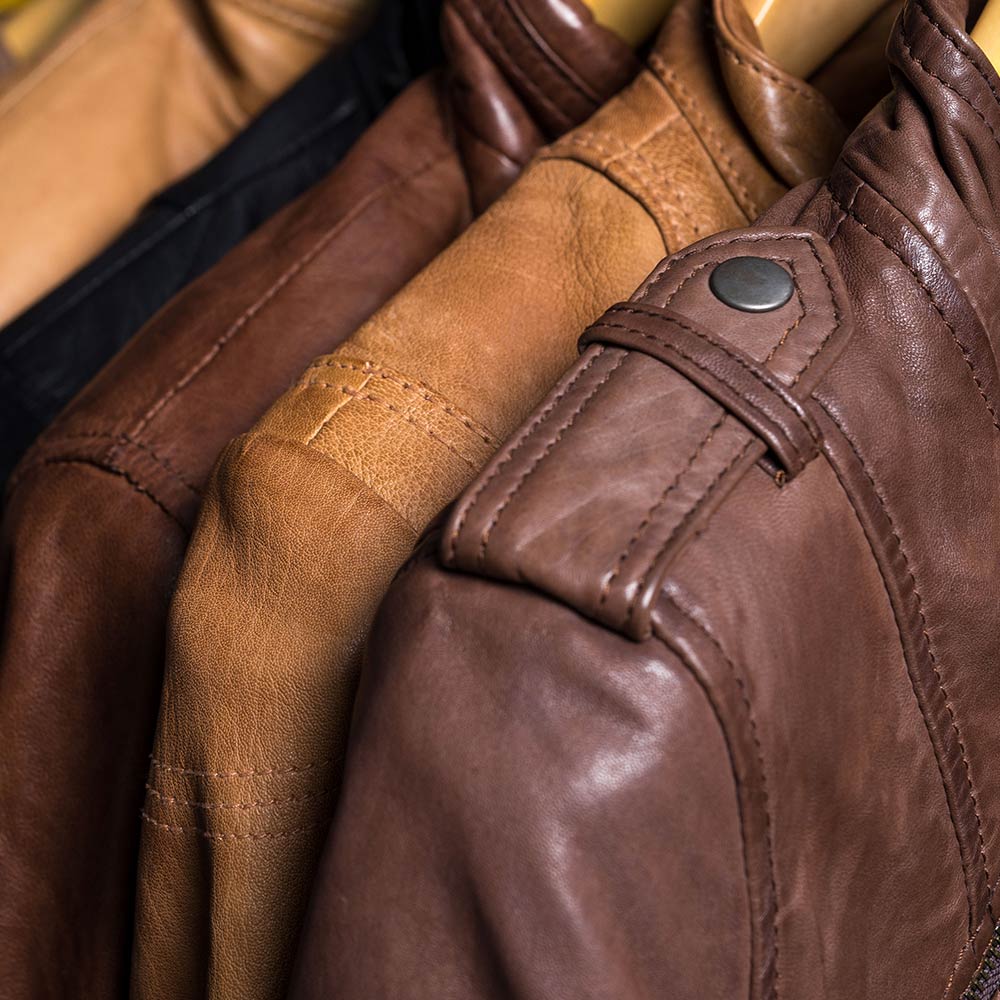
The hide matters every bit as much as the cut. Lambskin is soft, light, and drapes beautifully — lovely for a fitted, refined look, though it scuffs more easily than the tougher hides. Cowhide is the workhorse: thicker, more structured, and built to hold its shape through years of hard wear. Goatskin lands somewhere in the middle — that distinctive pebbled grain, tough but still supple.
Whichever you go for, real leather ages in a way fake never manages. It softens, it takes on the shape of the person wearing it, it earns a patina. Faux leather does the opposite — cracks and flakes at the elbows and cuffs after a season or two. Buy the real thing and it’ll look better a year in than it did the day it arrived.
Caring for Your Jacket
A bit of upkeep goes a long way. Condition the leather every few months so it doesn’t dry out — more often if you live somewhere dry. Caught in the rain? Let it dry on its own, well away from any direct heat; a radiator will cook the surface and crack it. Hang it on a wide hanger rather than folding it, and skip the plastic garment bag, which just traps damp and stops the leather breathing.
Finding the One That’s Right for You
The sequence is the whole trick. Fit first. Then a style that suits your build and your wardrobe. Then make sure the sizing genuinely works — and if standard sizes have always let you down, reach for a dedicated range or go custom. Do it in that order and you won’t just buy a leather jacket. You’ll buy the one that actually stays in your rotation.